According to recent market data in Serbia, the overall property market has not cooled down despite global economic turbulence, and instead continues to show resilience in pricing and transaction activity. In the third quarter of 2025, the total value of real estate transactions grew by 2.2% compared to the same period in 2024, indicating continued buyer interest.
Moderate Growth Expected Rather Than Price Declines
Experts analyzing the market do not expect significant price drops in 2026. Instead, the most likely scenario appears to be moderate price growth or stabilization, extending to commercial and industrial properties.
Milić Đoković, vice president of the Expert Council of the Real Estate Cluster of Serbia, notes that statistical trends point to a slight cumulative growth — roughly 5–10% annually. While this estimate is based on overall real estate figures (including residential), it reflects the broader strength of demand that also supports office and industrial segments.
For developers, investors, and businesses looking at commercial or warehouse spaces, this suggests that prices may not decline significantly in the near future. Rather than a market correction, what is more likely is a phase of stable or gently rising valuations, especially in prime locations and high-demand industrial corridors.
Structural Demand Drivers Still Strong
Several structural factors support ongoing demand across the property spectrum:
-
Financing remains active: The share of buyers using loans increased to over 40% in Belgrade, compared to 24.5%in 2024, showing that access to credit continues to fuel transactions.
-
Residential and investment buying spill over: Many investors who traditionally focused on apartments increasingly look toward commercial and industrial real estate to diversify their portfolios — especially where rental yields can be higher or more stable.
-
Limited new supply: A decline in issued building permits has constrained new construction overall, a trend that affects commercial development pipelines as well. With fewer new properties entering the market, existing assets retain pricing power.
Where Prices Are Heading in 2026
Although projections differ by property type and location, here’s how the landscape currently looks:
1. Commercial Offices
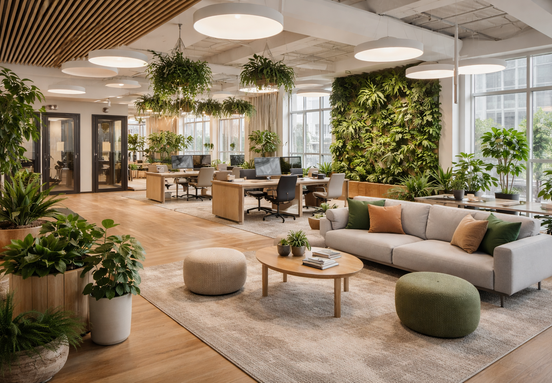
Demand for well‑located office spaces remains solid even amid hybrid work trends. While some secondary or outdated buildings may see longer vacancy periods, modern and flexible office spaces are still attracting tenants and buyers — particularly those suited for adaptable work environments.
2. Industrial and Logistics Properties
The industrial sector continues to benefit from structural economic shifts such as e‑commerce growth and supply‑chain reconfiguration. Warehouses, logistics hubs, and manufacturing facilities in strategic locations remain in high demand, which supports firm pricing even if yield expectations tighten.
3. Investment Property Yields
Investors are cautious but active. Cash remains cheap relative to inflation pressures, and real estate is still seen by many as a hedge against currency devaluation or stock market volatility. This sentiment supports continued investment into income‑generating commercial real estate, even if yield spreads narrow.
Affordability and Market Signals
Affordability remains a core challenge across the market. Residential data shows pricing climbing significantly over recent years — with old apartments in Belgrade nearly doubling in value since 2019 — and while this does not map directly onto commercial and industrial assets, it signals sustained overall property price elevation.
The ongoing preference for "hard asset" investment also indicates that commercial and industrial properties may not face steep price corrections — especially where rental yields compensate investors for holding costs and financing rates.